
Technical Integration
API integrations, automated data imports and platform migrations. Connecting your website, CRM, accounting and email systems.
AI Training & Integration
We help organizations determine where AI tools can save time, train staff to use them effectively, and connect them securely to the systems they already rely on — including their websites, documents and business platforms.
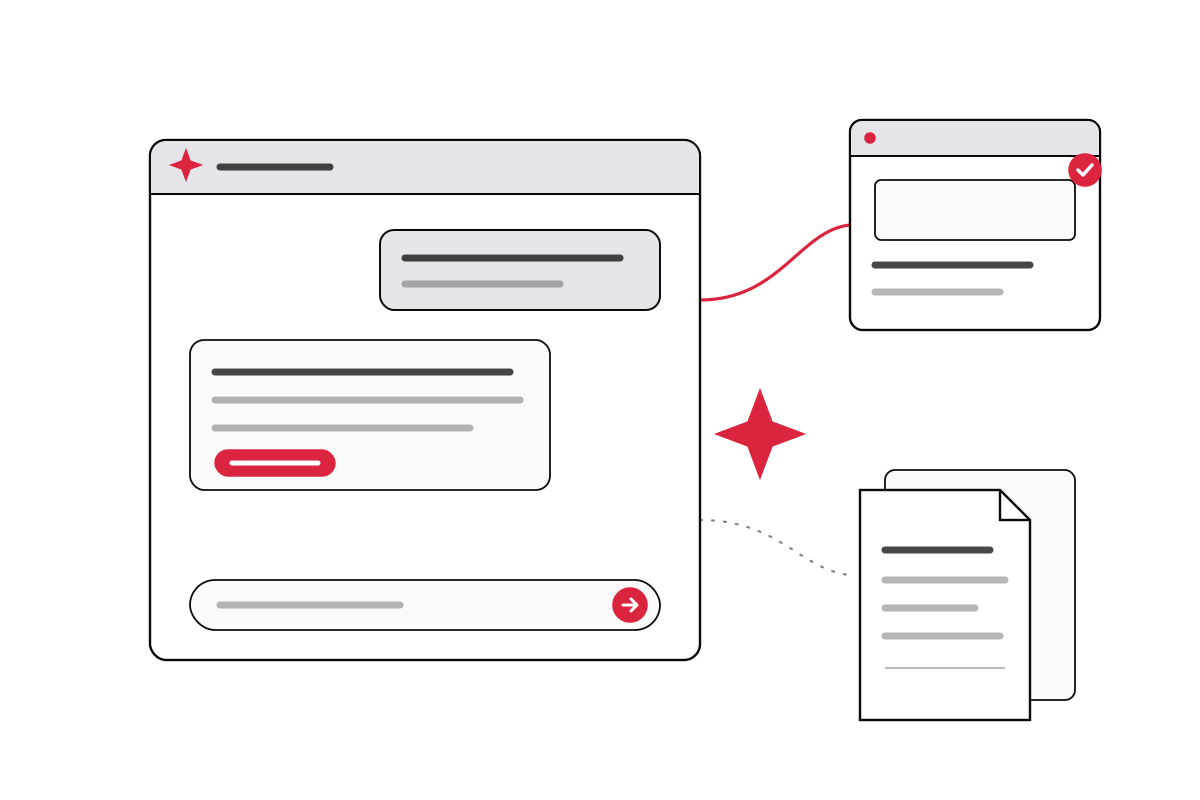
Overview
Useful results depend on the right tasks, the right configuration and trained staff.
AI assistants can now draft correspondence, summarize long documents, analyze spreadsheets, write code and operate other software on a user’s behalf. For a small organization, that capability can recover a meaningful number of staff hours each week. In practice, many organizations have purchased subscriptions that are used only occasionally, or have staff using personal accounts with no agreed standards for what information may be shared.
We use these tools extensively in our own development and operations work. Our role is to identify where they provide a measurable benefit for your organization, configure them appropriately, and train your staff to use them with confidence and sound judgment.
Training
Instruction built around your organization's actual work.
Live sessions for groups or individuals, delivered on site or over Google Meet or your preferred platform. Training covers how to write effective instructions, how to provide the assistant with the context it needs, how to verify its output, and which tasks it performs well or poorly. Examples are drawn from your staff’s own work, e.g., drafting a grant report, summarizing board materials or cleaning up a contact list.
A concise overview for executives and boards covering current capabilities, costs, risks and realistic expectations, to support informed decisions about adoption and investment.
Written guides, prompt libraries and recorded sessions specific to your organization, so that new staff can be trained consistently and existing staff have a reference when they need one.
Assessment
Identifying where AI provides a measurable benefit.
We review your organization’s recurring tasks with the staff who perform them and identify those best suited to AI assistance, typically work that is repetitive, text-heavy or dependent on assembling information from several sources. The result is a prioritized list of opportunities with an estimate of the effort required and the time each is likely to save.
We recommend a platform, such as ChatGPT, Claude, Gemini or Microsoft Copilot, based on your requirements and existing software, then configure it for organizational use: a team or business workspace, administrative controls, data retention and training settings, shared projects containing your organization’s reference material, and single sign-on where available.
Integration
Connecting AI tools to the systems where your work takes place.
An AI assistant is considerably more useful when it can access your documents and act within your systems, rather than working only from text pasted into a chat window. Most major assistants now support connectors, including those built on the Model Context Protocol (MCP), that provide this access under defined permissions.
We configure AI assistants to update your website directly, so that authorized staff can request changes in plain language, e.g., publishing an event, revising a page or adding a new team member. Access is granted through a dedicated account with limited permissions, backups are confirmed before changes are made, and a review process is established for everything the assistant publishes. We support WordPress and a range of other platforms.
Connecting assistants to Google Workspace, Microsoft 365, CRMs, accounting software and project management tools, so that staff can search records, draft responses from existing correspondence and prepare reports without moving between applications.
Adding AI steps to automated workflows: classifying and routing incoming inquiries, extracting data from invoices and PDFs, summarizing form submissions, and preparing draft replies for staff review.
Purpose-built tools developed on the APIs of the major AI providers, including website assistants that answer visitor questions from your own published content and internal tools designed for a specific process.
Governance
Clear standards for how your organization uses AI.
Staff are frequently using AI tools before their organization has decided how they should be used. We help establish a written acceptable use policy suited to your size and sector, covering:
AI output requires review. Current models can state incorrect information with complete confidence. Every workflow we design includes a point at which a qualified person checks the result.
Capabilities change rapidly. Tools, pricing and plan terms change frequently. We base recommendations on current information and review them as the market develops.
Not every task benefits. AI is not always the best tool for every problem. When traditional automation or standard procedures offer superior reliability and cost-efficiency, we will recommend those as the best solution.
Visibility in AI search results, including ChatGPT, Perplexity and Google AI Overviews, is addressed under our SEO services.
Pricing
Training, consulting and integration are billed at our standard hourly rate.
All AI training, consulting and integration work is billed at $105/hr for actual time worked, including preparation of organization-specific training materials. We provide an estimate before work begins, and fixed-price quotes are available for defined engagements such as a training program or a workflow assessment.
AI subscriptions are purchased by your organization directly from the provider. We do not resell or mark up third-party subscriptions.
See the rates page for travel costs and the emergency rate policy.
Questions
Also available
API integrations, automated data imports and platform migrations. Connecting your website, CRM, accounting and email systems.
New sites, rebuilds and ongoing changes — WordPress, Shopify, Squarespace and more. Built so you can actually update them yourself.
Technical SEO, local search and structured data. Fixing the things that keep your site out of search results.
Get in touch
There is no charge for an introductory conversation. Tell us what you are trying to do and we will tell you honestly whether we are the right fit — and roughly what it should cost.